Playing your first scale on a Native American flute
NATIVE AMERICAN FLUTE PLAYING BASICS.
In the past three articles we've looked at How to buy a Native American flute in two parts and How to Care for your NAF once you've purchased one. In this article we will cover playing your first Native American flute scale and begin to familiarize yourself with the basic fingering and notes of this wonderful instrument.
There are many books and videos about how to get started on the Native American flute. Odds are when you purchased your new NAF you may have got one from the maker. But just in case you don’t have one, you lost it or you need a quick, easy refresher we’ll quickly go over the basics in this article, along with some handy playing tips that you can use all the time.
EASY TO PLAY.
The Native American flute is a fipple flute. There are many fipple flutes around the world. European recorders, tin whistles and penny whistles and ocarinas to name a few. Fipple flutes, unlike silver flutes, pan-pipes and other wind instruments do not require you to produce the sound with the shape of your mouth. This makes playing a musical note very easy. You just put your lips to the mouthpiece and blow. In fact you can do it without covering any of the finger holes.
Go ahead and try it now. Leave open all the holes and just blow into the mouthpiece.
HOW TO HOLD YOUR NAF
Hold your flute with the first three fingers from each hand and both your thumbs. The flute should be at about 45˚ from your body. Stand up straight, hunching your shoulders will hinder your breathing. The holes are covered with the first three fingers from each hand. Most people cover the top three holes with their left hand and the bottom three holes with their right hand. However, you may switch hands if you feel that is more comfortable. Use the fleshy pads of your finger-tips, not the tips themselves. This helps prevent air from leaking past your fingers.
Let’s assign numbers to the finger holes of the NAF, starting from the bottom and working our way up to the top of the flute. The hole closest to the bottom of the flute is Hole #1, the next one up is Hole #2, then hole #3, and so one until the last one hole which is hole #6. This way of numbering conforms to the basic scale of the flute. (fig. 1)
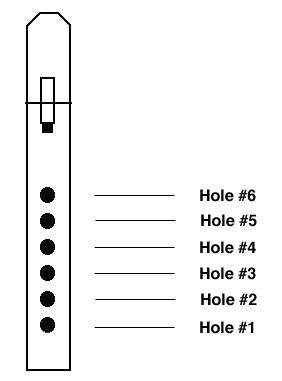
Fig. 1 The finger holes of a six holed NAF
THE NATIVE AMERICAN FLUTE SCALE
The scale of the Native American flute is a pentatonic minor scale. Penta mean five, from the Greek Pente. So a pentatonic scale has five notes. (We'll talk more about the pentatonic minor scale at a later time.)
You may be asking yourself "If the pentatonic scale only has five notes why does the NAF have six holes?" As you will see, one of the holes is always covered when playing the pentatonic minor scale on a standard Native American flute.
Let's explore the scale one note at a time. We'll start with the lowest note. As well as being the lowest note on your flute, this also the note that determines which key your flute is in. For example if your flute is in the key of G then the lowest note will be a G, or, if your flute is in the key of F# then the lowest note is an F#.
In the diagrams below a hole that is covered is shown as a black dot, while a hole that is not covered is shown as an open circle.
If the note squeaks or sounds weak, check to make sure that all the holes are covered and that you are not leaking any air. You do NOT need to press hard to do this. If you are leaking then wiggle your fingers a little to move them and seal any leaks. Pressing harder, as we shall see later, will only hinder your playing. You can practice this in front of a mirror to see where you’re leaking air. Also make sure you are not blowing too hard as that will also cause the flute to squeak.
Congratulations, you’ve just played the basic scale of the Native American flute!
As you may have noticed Hole #4 always remains covered for the basic scale of the Native American flute that is because the basic NAF pentatonic scale never uses Hole #4. You always cover this hole.
To play the scale from the top down, cover the holes in the opposite order as shown above. I would repeat this every day several times to get your finger used to it. This is a very good basic warm-up excerse.
LET'S REVIEW
ZEN TIP: The Native American flute is a relaxing and soothing instrument. Blow gently, press lightly and take your time. Let the sounds come naturally and easily.
Have fun!
Leave a comment here or email me at blog@cedarmesa.com
© 2006 Cedar Mesa Music. All rights reserved.
In the past three articles we've looked at How to buy a Native American flute in two parts and How to Care for your NAF once you've purchased one. In this article we will cover playing your first Native American flute scale and begin to familiarize yourself with the basic fingering and notes of this wonderful instrument.
There are many books and videos about how to get started on the Native American flute. Odds are when you purchased your new NAF you may have got one from the maker. But just in case you don’t have one, you lost it or you need a quick, easy refresher we’ll quickly go over the basics in this article, along with some handy playing tips that you can use all the time.
EASY TO PLAY.
The Native American flute is a fipple flute. There are many fipple flutes around the world. European recorders, tin whistles and penny whistles and ocarinas to name a few. Fipple flutes, unlike silver flutes, pan-pipes and other wind instruments do not require you to produce the sound with the shape of your mouth. This makes playing a musical note very easy. You just put your lips to the mouthpiece and blow. In fact you can do it without covering any of the finger holes.
Go ahead and try it now. Leave open all the holes and just blow into the mouthpiece.
HOW TO HOLD YOUR NAF
Hold your flute with the first three fingers from each hand and both your thumbs. The flute should be at about 45˚ from your body. Stand up straight, hunching your shoulders will hinder your breathing. The holes are covered with the first three fingers from each hand. Most people cover the top three holes with their left hand and the bottom three holes with their right hand. However, you may switch hands if you feel that is more comfortable. Use the fleshy pads of your finger-tips, not the tips themselves. This helps prevent air from leaking past your fingers.
Let’s assign numbers to the finger holes of the NAF, starting from the bottom and working our way up to the top of the flute. The hole closest to the bottom of the flute is Hole #1, the next one up is Hole #2, then hole #3, and so one until the last one hole which is hole #6. This way of numbering conforms to the basic scale of the flute. (fig. 1)

Fig. 1 The finger holes of a six holed NAF
THE NATIVE AMERICAN FLUTE SCALE
The scale of the Native American flute is a pentatonic minor scale. Penta mean five, from the Greek Pente. So a pentatonic scale has five notes. (We'll talk more about the pentatonic minor scale at a later time.)
You may be asking yourself "If the pentatonic scale only has five notes why does the NAF have six holes?" As you will see, one of the holes is always covered when playing the pentatonic minor scale on a standard Native American flute.
Let's explore the scale one note at a time. We'll start with the lowest note. As well as being the lowest note on your flute, this also the note that determines which key your flute is in. For example if your flute is in the key of G then the lowest note will be a G, or, if your flute is in the key of F# then the lowest note is an F#.
In the diagrams below a hole that is covered is shown as a black dot, while a hole that is not covered is shown as an open circle.
THE FIRST NOTE
|
If the note squeaks or sounds weak, check to make sure that all the holes are covered and that you are not leaking any air. You do NOT need to press hard to do this. If you are leaking then wiggle your fingers a little to move them and seal any leaks. Pressing harder, as we shall see later, will only hinder your playing. You can practice this in front of a mirror to see where you’re leaking air. Also make sure you are not blowing too hard as that will also cause the flute to squeak.
HINT: The bottom note on the Native American flute can be the hardest, so don’t worry if it squeaks at first, it will come with time.
TIP: Less is more! Blowing too hard on the bottom note can cause the flute to "jump" up to the higher octave.
THE SECOND NOTE
Again, gently blow into the flute. |
THE THIRD NOTE
You should now have the bottom two holes uncovered and the top four holes covered. Once again, blow gently into the flute. |
THE FORTH NOTE
You should only be covering the top three hole of the flute. Blow into the flute |
THE FIFTH NOTE
Instead, leave it covered and uncover Hole #5, the fifth from the bottom. Again, blow into the flute |
THE OCTAVE
Continue to cover Hole #4. Once again blow into the flute |
Congratulations, you’ve just played the basic scale of the Native American flute!
As you may have noticed Hole #4 always remains covered for the basic scale of the Native American flute that is because the basic NAF pentatonic scale never uses Hole #4. You always cover this hole.
WHY HAVE A SIX HOLED FLUTE?
98% or more of the tunes you hear played on Native American flute never use the forth hole. You might be asking "why even bother to have a hole there?". This is a valid question and in fact many makers offer five hole Native American flutes. They will tell you that you can get all the pitches of a six hole flute, both the ones in the pentatonic minor scale and all the extra pitches we haven't covered yet. While this is true some of the fingerings for those extra pitches are very hard to find on a five hole NAF as they don't fall into a pattern. On a six hole NAF they do fall into a pattern which makes finding and playing them much easier. Some makers have found a good middle ground by tying a piece of leather over the fourth hole. This turns the flute into a five hole flute for the basic NAF pentatonic scale, but can be untied when you want the extra notes of a six hole flute. The first maker I noticed doing this was Odell Borg of High Spirits flutes. He felt that it made the flute eaier for beginners but with enough flexibliity for more experienced players.
TIP: When playing the top note (the octave) gently balance the flute between your left hand ring-finger and both your thumbs. This will help keep you from dropping the flute while all the other holes are uncovered.
To play the scale from the top down, cover the holes in the opposite order as shown above. I would repeat this every day several times to get your finger used to it. This is a very good basic warm-up excerse.
TIP: If you are having trouble with the lower notes squeaking try playing the scale from the top down instead. That way you only have to worry about covering one hole at a time as you close each hole, not all six at once.
LET'S REVIEW
- Cover the holes with the fleshy part of your finger tips, not the tips.
- Make sure that no air is leaking.
- Don’t press down too hard. Just enough to seal the holes.
- Blow gently, especially on the bottom note. You may need to blow harder on the higer notes
- Always leave Hole #4 covered.
ZEN TIP: The Native American flute is a relaxing and soothing instrument. Blow gently, press lightly and take your time. Let the sounds come naturally and easily.
Have fun!
Leave a comment here or email me at blog@cedarmesa.com
© 2006 Cedar Mesa Music. All rights reserved.
Labels: How to...

4 Comments:
Thank you for an Interesting Read.
Toga
I just recently acquired a Native American Flute. This site has already given me great information - thank you very much!
safe travels,
Bob
Dorcas - Thanks. I never knew how the holes were numbered and could never have figured out the 6-4 note and that the 4 hole is always closed. I play transverse flute and piano.
Post a Comment
<< Home