Saturday, June 12, 2010

Peru Journals Part 7 An Inca House: Ollantaytambo

Like most people, when I think of Peru the first thing that comes to mind is Machu Picchu, the lost city of the Incas. That began to change with my visit to Pisac, and then became permanent with our visit Ollantaytambo (o-yawn-tay-tam-bo). Set into the hills at the northern end of the Sacred Valley Ollantaytambo is a powerful and impressive fortress that dominates the surrounding area.

Ollantaytambo Peru 0241.jpg
Ollantaytambo
Click to enlarge


Ollantaytambo is about 47 miles from Cuzco, at an altitude of 8850'. Like Pisac, the old Inca town is situated above the colonial town, which itself dates back to Incan times. The word Ollantaytambo is a compound Quechua word. Tambo the word for a town that offers rest and lodging along a road.

Ollantaytambo was a important walled and fortified city. It controlled the road that lead north along the Urubamba river toward the Amazon region. This area, which the Inca called Antisuyo is where the modern name Andes comes from and was one of the four quarters of the Inca world. The people of the Amazon jungle, the Antis were one of the biggest enemies of the Inca. The road also brought many desirable items too. Fruits of all kinds and Coco leaves, which would not grow in the higher altitudes of the Inca homeland.
Ollantaytambo Peru 0258-Market.jpg
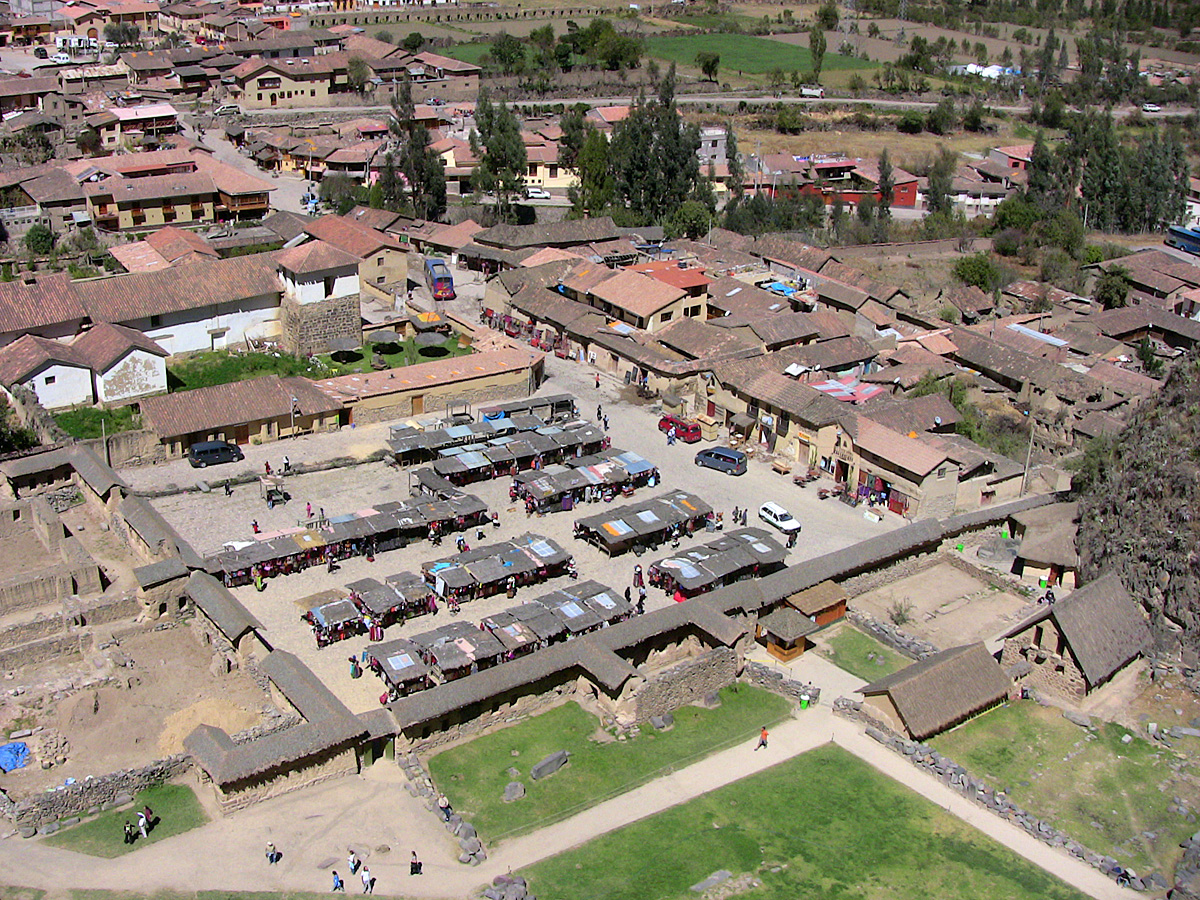
Urban Ollantaytambo
Click to enlarge


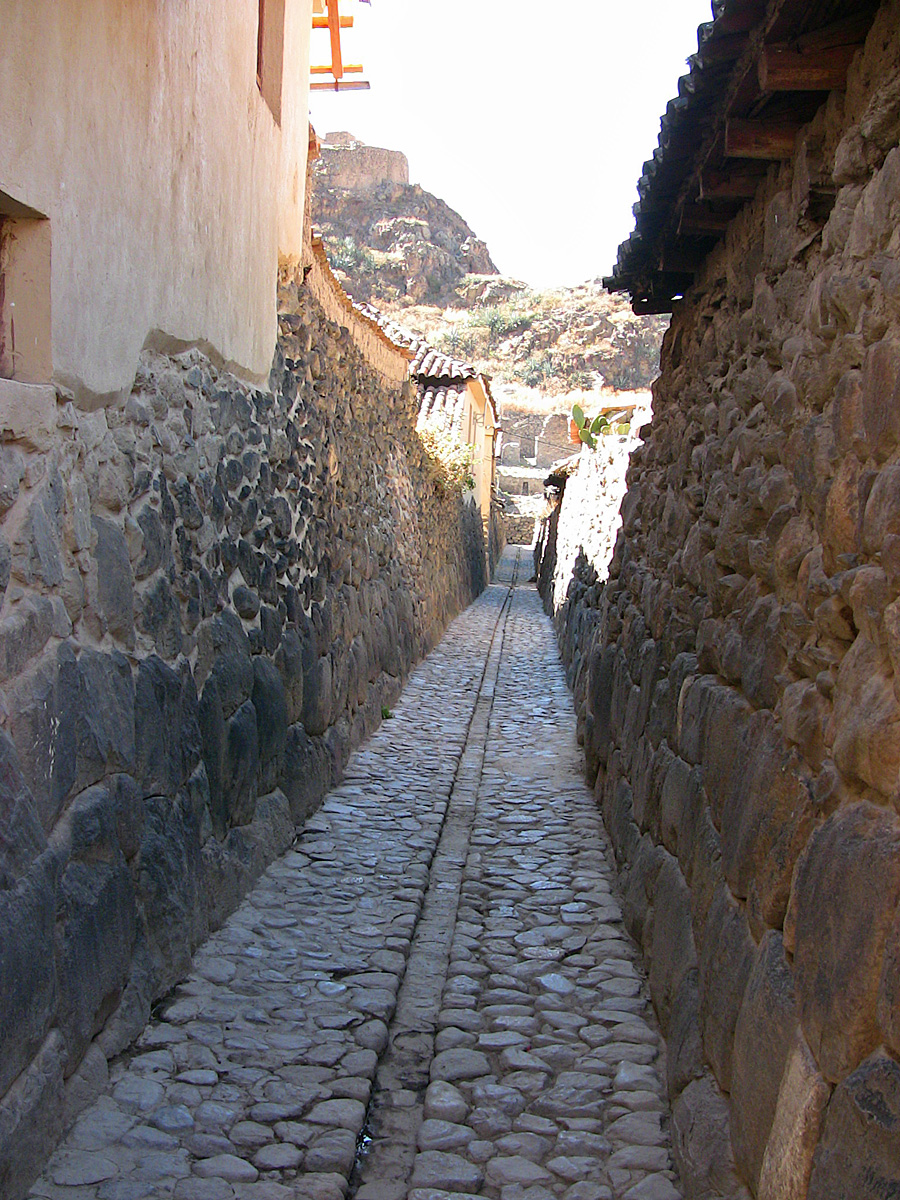
In the hills above the town are the terraces of Ollantaytambo and a massive Sun Temple. Down below, in the part of the city that is still lived in, was the Urban sector. Laid out in a typical Incan grid, this is the only place in Peru where one can still see people living in buildings that were used as homes in Incan times. The narrow streets still have their water channels and water still flows in them, although not while we were there. For some reason that even our guide didn't know, they were not flowing that day.
ollantaytambo-inca-street_0.jpg
An Inca street, Ollantaytambo
Click to enlarge


Our first stop was to a historic Inca house down one of these narrow Inca streets. We headed down the street aways from the plaza and, as always were mobbed by vendors, mostly women and girls, selling their wares. I bought a knit cap with some llamas in the design and the distinctive Andean ear flaps.

plaza-ollantaytambo
The Plaza, Ollantaytambo
Click to enlarge


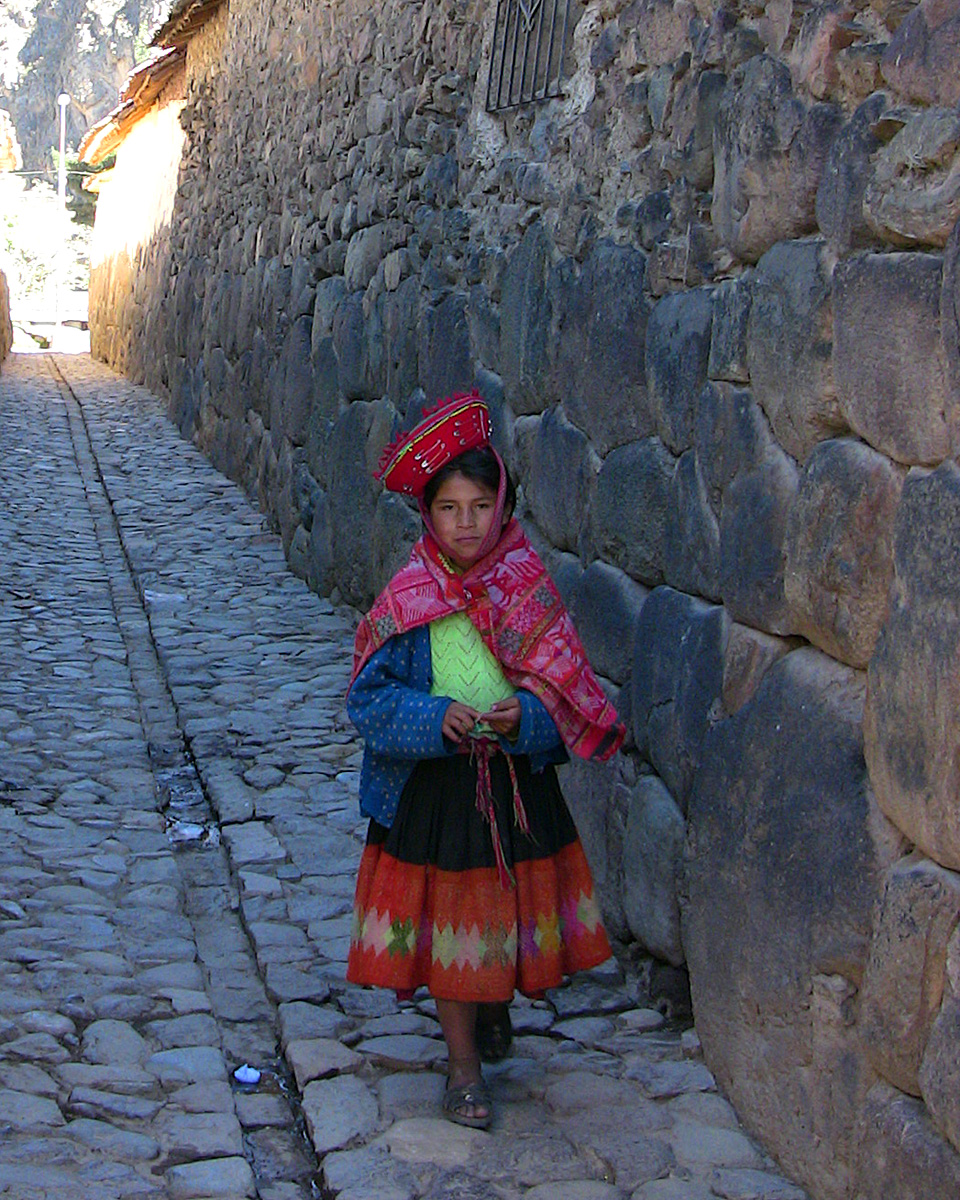
As we got farther away from the plaza, and closer to the Inca house, the street got quieter until the only other non-tourist in it was a young girl in traditional costume headed to the plaza to pose for tourist photos. I thought the Inca street would make for a nice location for a photo of her and gave her a Sol to take a couple shots.
ollantaytambo-quechua-girl_.jpg
A young Quechuan girl, Ollantaytambo
Click to enlarge


Her hat, like all the traditional hats, indicated where she was from. Like most Quecha people, she was quiet, somewhat shy, but very polite. It struck me, how different we must seem to her, as she does to us. What must she make of the throngs of tourists that flock to her town and get excited by her traditional clothing. "Does she go home at night and put on jeans and listen to her iPod", Claire wondered out loud? A good question.

As we would find out that night, during our private dinner in a Quechan home, while we as tourists marvel at the beauty of the landscape, the strong cultural tradition, and allow ourselves to wonder if their life, closer to the rhythms of the earth, is richer than ours. But the truth is their lives are hard, rough and full of struggle. While we as tourists dream of a more "spiritual" lifestyle they want what we have. Cars, TVs, better health care, decent food, a clean, safe environment, a better life for their children.

If we dream and wonder about their lives, they dream and wonder about ours.

I witness this all the time while I'm traveling through the American Southwest. Tourists come from all over the world to see Native Americans, fascinated by their culture and thinking that the Native cultures have the answer to our fast paced modern lives. They want to take an Indian name, do a sweat, and witness a ceremony. They dream of a life closer to the earth, in tune with nature. All the more ironic as our ancestors worked hard to create a life away from nature. Houses, roads, cars, etc. A life sheltered and protected from the elements. The history of most of human kind, especially western culture, has been to create a world of comfort and safety. Yet for some, when they attain that, they think that something is missing in their lives. Maybe it is. I guess each person needs to answer that for themselves.

I too have fallen into the myth of the indigenous life. During my time in Peru my senses were overwhelmed with the sights, sounds and smells of a unknown, exotic culture. But everyday I saw something that made me realize how lucky I am to have the life that my culture provides. Nevertheless, this did not diminish my respect and admiration for the people and culture I was visiting. Their culture has a richness and an authenticity that our modern, mass produced world lacks. But I still want my Starbucks...as it were.

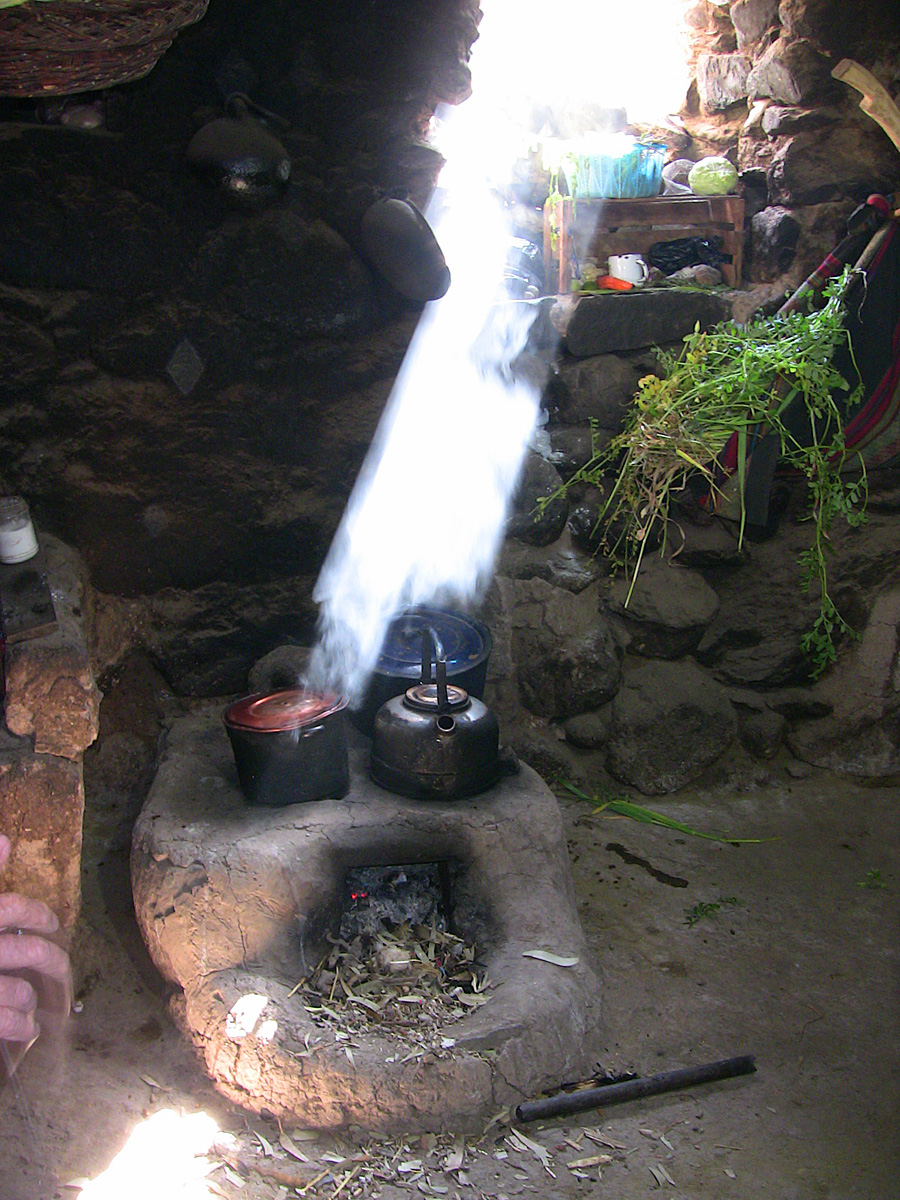
When we reached or destination, the Inca house or wasi, this contrast of life styles was all brought into sharp focus as we laid eyes on their kitchen.
inca-kitchen_0325.jpg
A traditional Inca kitchen in modern Ollantaytambo
Click to enlarge


Just like the Chicha house, this home contained a very primitive kitchen. In fact more primitive. There wasn't even a small gas stove here. Just wood burning. Huddled up next to the right side was a brown and white Guinea Pig.


The house was part of a larger, traditional compound called a kancha. Most kanchas come in pairs that open onto a common courtyard or patio. The whole compound is walled off from the street, accessed through a small doorway.

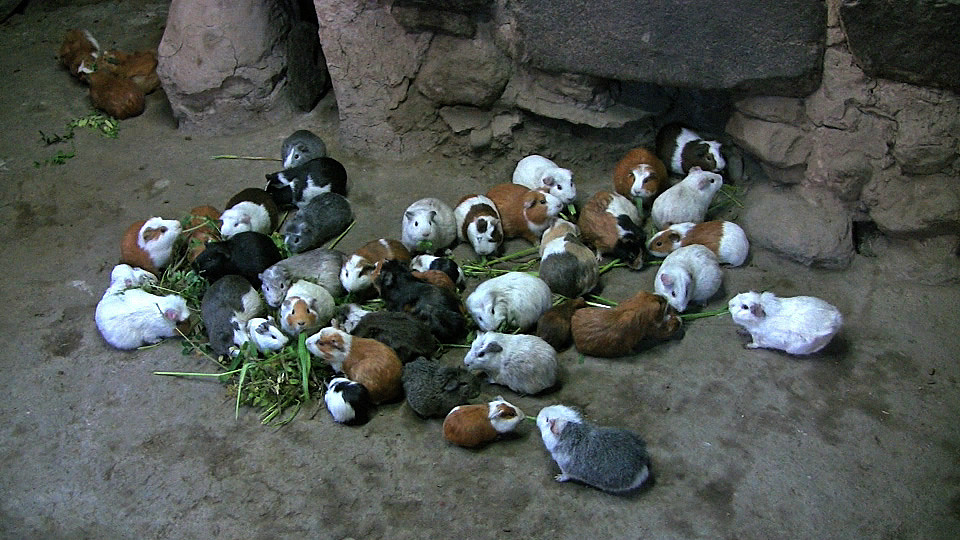
The home we were visiting was just one large room. There was very little furniture. The bed was just a pile of blankets on a platform raised off the floor. The floor was the domain of guinea pigs, or cuy which wandered around, busily eating, having no knowledge of their fate. (Where as we humans do, of course...)
cuy-ollantaytambo
Guinea Pigs or Cuy Click to enlarge


Laid out next to the wood stove were some common kitchen items and other things arranged for us to see. Different potatoes, corn a couch shell trumpet and other items.

incan-food-stuff_0333.jpg
Kitchen stuff
Click to enlarge

Above this, set in a niche in the wall were two skulls from the ancestors of the home's current occupants.

inca-wasi_0330.jpg
Ancestral Skulls Click to enlarge


Hanging from the roof beams in a bundle of other items was one of the most unusual things we saw in Peru. Unusual to us, anyway. This was the fetus of a Llama. In Prehispanic times the Inca sacrificed llamas to their Gods. These days their fetus are still used as an offering to the Mother Earth, Pachamama. They are buried under the foundation of a building before it goes up, for blessings of health, safety, happiness, wealth and fertility. llama-fetus2
A Llama fetus
Click to enlarge


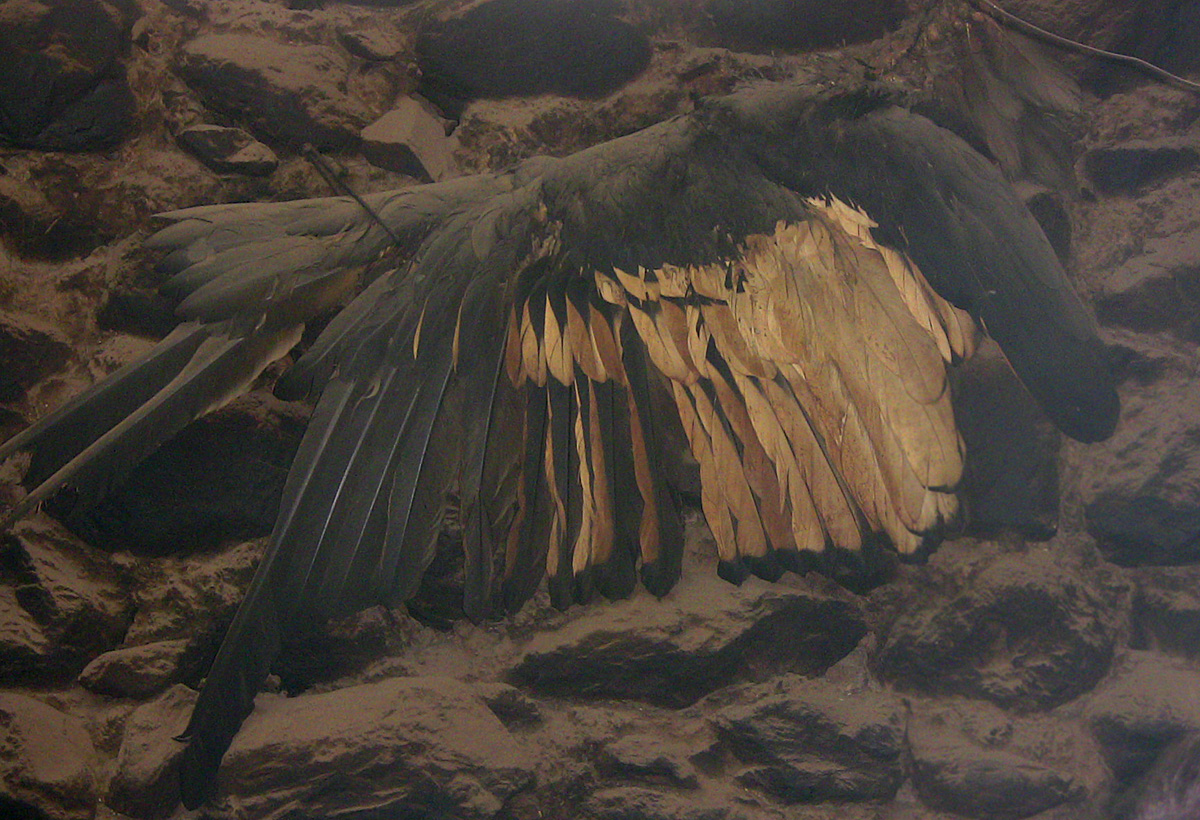
The wing of a condor hung on the west wall.
condor-wing_0331.jpg
A Condor Wing
Click to enlarge


To end this post I'm going to let our guide, Fredy, talk about some of the items in the house via an amazingly high quality video clip...


Next we'll take a look at the upper section of Ollantaytambo, with its towering terraces, double-jam doorways and Sun Temple.

All text, images and video © 2010 Scott August / Cedar Mesa Music. All rights reserved.

Previous Peru Journals
Part 1: "Journey to Peru"
Part 2: "Lost in Translation"
Part 3: "Flight of the (Silver) Condor"
Part 4: Inca Pisac
Part 5: The Pisac Market
Part 6: Corn Beer and River Rafting

Thursday, June 03, 2010

Another Path: Improvisation for Mojave Flute

Here is a video of a Mojave flute solo improvisation I gave at a bookstore last month.

The piece is called Another Path


© 2010 Cedar Mesa Music, BMI

Wednesday, May 26, 2010

Panorama Readers Award

The last time I talked about how to run an Artist Owned record label I talked about tracking sales and managing your inventory. I also talked about the app that I use to do that: Panorama by Provue Development. You can read about that here.

I found out today that Panorama is up for an Ars Design Award. Not only that but they are also allowing the public to vote. Like Cedar Mesa Music, Provue is a little company and needs our support. If you are a fan of my music go over to the Ars Design Award webpage and vote for Panorama. You don't have to register or sign up for anything. Plus you can vote once a day, per computer till May 30th, 2010.

Thanks!

Thursday, April 29, 2010

Musical Echoes 2010, Day 1

I just got back from Musical Echoes in Florida a couple days ago. This was my first time there and I had a wonderful time. This trip included a lot of "firsts" for me and I thought I'd share some of the weekend with everyone.

As always, the days leading up to a trip to perform are always busy. This is more so when I'm not driving as I have to figure out how to get all my stuff to the location. The week before I shipped product, forgetting to pack my Anasazi book. Then I had to borrow a better suitcase so my shirts and coats wouldn't get too wrinkled. They always do anyway.

The next morning when we arrived at the terminal the TSA line snaked back and forth in a landing above the ticket counter, out the door down to the next terminal and then doubled back on itself. I thought sure I was going to miss my flight. However after spending over an hour in the line I made it to the gate just as boarding started.

I had to stop at DFW, which was much easier to deal with than LAX even though I'd never been there before. They had a train that connects all the terminals like a lot of newer airports. From DFW I boarded a 50 seat jet and head to Ft. Walton Beach.

As I headed toward the baggage claim area there was my "ride", David waiting for me. David is one of the organizers and I liked him right away. A musician himself, he had a strong southern accent and welcomed me to "LA"

"LA?", I replied in confusion.

"Yeah, Lower Alabama, that's what we call it down here".

I felt right at home.

We drove by the park where the festival is held, right on the water of a channel behind a barrier island. I met the sound guy and some others. Everyone was really friendly. Then he dropped me off at my room, which was too nice for the likes of me, and said to call when I needed a ride in the morning. I grabbed a bite for dinner, read some of the book I brought and went to bed. It had been a long day.

The next morning I woke to clear, sunny skies. I grabbed some breakfast at a Waffle House (another first) and then David swung by to take me to the festival.

There I met Dave McCullen in person, we had only dealt online before (another first). Dave, for those of you that don't know, makes amazing PVC rim blown and oblique blown flutes. He has been doing so for a long time. Second perhaps to Michael Graham Allen. I have one of his PVC Hopi flutes. He doesn't sell flutes, but gives them to those lucky few. He works under the name Warrior Wind Flutes. While we were talking I was expressing how lame I felt since I hadn't shipped a blanket for my table. Dave said he could get one and took off. He returned about five minutes later with a really nice blue fleece with a "Native" design on it. When I asked who let him borrow it he replied "I bought it for you". I was so touched, but insisted that I pay him back. He took the money I gave him and promptly bought a copy of Radiant Sky from me! He later came by the both with a Ney and a Kaval. Several of us were lucky enough to get flutes by him. What a treat. I got a Ney and a Kaval and another Hopi flute and an oblique blown flute with a NAF tuning. The last two I can play, the Ney and Kaval, not yet.

Mark Holland had a booth near mine, Jeff Ball showed up later and set up next to me. Also there was Jonny Lipford and Michael Searching Bear. I'd met Jeff and Mark and Jonny before. Jeff I've been lucky to know since 2002 and Mark I met in 2007 I think. They are both great guys and as we all know great flute players. Jonny I meet at the last INAFA convention. He's really coming up with his career and I hoped to get a chance to talk to him sometime during the weekend.

During the day there was a flute competition and then the performing began. All this time the nice sunny sky was becoming darker and darker, the air turned cold and rain threaten to start. I took the stage at 6 PM and as I was playing I could see lightening to the west. It started to drizzle. The sound guy, Bob, told me to keep playing while they dismantled the lights in front of the stage and the speaker stacks. I slogged on as best I could as the lightening got closer, thunder started to clap, the rain increased, and the sound guys yelled back and forth as they lowered the lights in front of me. Finally the rain got so hard it was time to shut everything down. Even with all the commotion I felt lucky. At least I got to play. All of the evening performances were canceled. Once I stopped the brave few that were still in the audience rushed for cover and we all headed out.

ME2010-friday-evening
Performing during the lightening, thunder and rain
Photo by Cynthia McDonald


The lightening storm was amazing. I don't think I've ever seen so much lightening in one storm. We don't get a lot in LA. A bunch of us went to dinner. Myself, Katy Owen, Deborah Peterson, Lynn Lipford, Michael Searching Bear and his band, and the 2nd place winner of the flute competition, Traci Conley Junge and her family, were just part of the group. While at dinner Katy told us that she'd been hit by lightening three times!

We all hoped for better weather the next day...

Wednesday, April 21, 2010

Anasazi Flute Duet Video

Here is a video of me playing both parts of an Anasazi flute duet.


This is is a G Anasazi by Earth Tone Flutes recorded live on March 12, 2010 in Orange County, CA. I recorded the first pass and then looped it back to play a second part against it. This was all done in real time using Digital Performer.

For more information about these flutes check out my articles. To learn how to play one purchase my Complete Guide to the Anasazi Flute

© Cedar Mesa Music. All rights reservered.